
When SAP S/4HANA Isn’t the Problem: What’s Really Holding Your Programme Back
Mar 19, 2026
- SAP
Many organisations invest in SAP S/4HANA expecting a step change in control, visibility and efficiency. On paper, the platform is right. The business case stacks up. The programme is delivered.
Yet the business is still frustrated.
Processes feel heavier than expected. Workarounds appear. Reporting stays manual. A small number of people keep the wheels turning.
In most cases, SAP is not the problem. What sits around it is.
By the time clients reach out, the pattern is usually familiar.
They have:
But the step change has not landed.
Confidence starts to dip. The business questions the design. Delivery teams keep pushing forward while the organisation quietly works around the system.
At this point, many programmes drift into expensive optimisation work without first isolating the real root causes.
S/4HANA is a mature enterprise platform. Where programmes struggle, the root cause usually sits in the surrounding operating model.
We consistently see gaps across four areas.
Too many programmes are milestone driven rather than outcome driven. Governance tracks dates and stage gates but gives less attention to operational readiness.
Teams hit milestones. The business still is not ready.
Early design trade offs cast long shadows. Assumptions made in Explore and Realise often become hard coded into the solution.
Where decision traceability is weak, organisations lose sight of why the system behaves the way it does. Fixes then become broad and expensive rather than targeted.
There is almost always a gap between the designed process model and how the business actually works.
Workarounds appear. Manual steps creep back in. Local practices override global design.
You can have a technically correct build and still miss business value if adoption is not actively measured and managed.
SAP delivers deep embedded capability. In many programmes, only a narrow baseline is used.
That leaves:
Most clients are sitting on more capability than they realise.
When we run structured diagnostics, a few themes appear again and again.
Programmes often push into UAT to protect timelines rather than because the solution is genuinely ready. UAT should confirm readiness. It should not be where you discover you are not ready.
Even well configured systems fail if adoption is weak. In most cases, this is not about volume of training. It is about precision. Change activity is not always tightly anchored to the real impacts identified during Explore. Without that link, users revert to old behaviours quickly.
SAP provides extensive process content, test assets and implementation guidance. Many organisations simply do not exploit it fully. The result is predictable. Programmes work harder than they need to and realise less value than they should.
The Delaware Diagnostic Framework exists to answer one simple question.
What is actually happening in your S/4HANA landscape today?
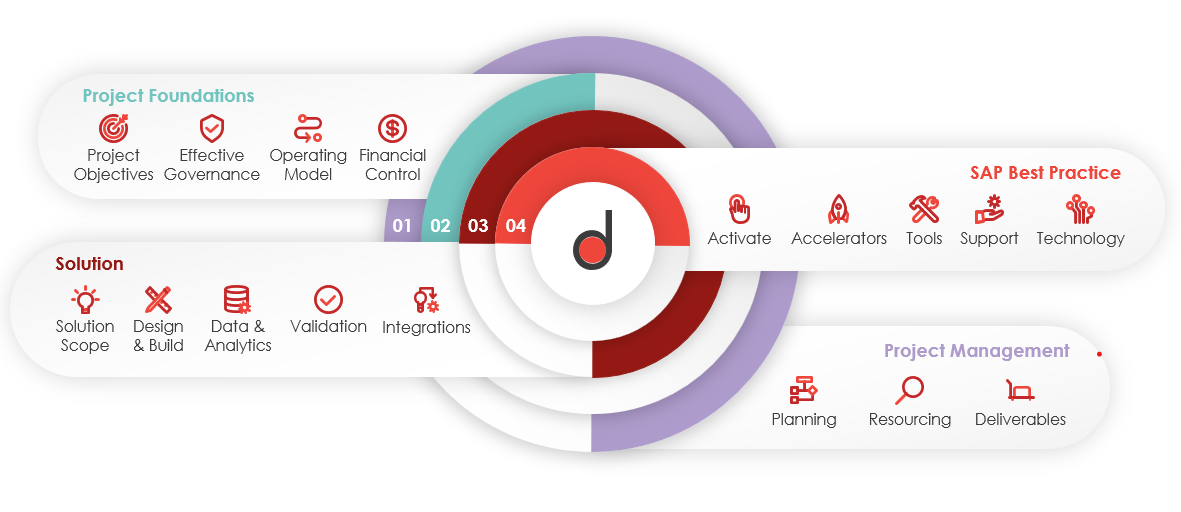
We run a structured four pillar review covering governance, design lineage, operational usage and platform activation.
The output is deliberately practical:
No theatre. No generic maturity scoring. Just a fact based view of where to focus. This gives leadership teams something most programmes lack at this stage, clarity before further investment decisions.
If your organisation is saying, “S/4HANA is live but not delivering what we expected,” pause before launching another wave of change.
Start with clarity.
Ask yourself:
A structured diagnostic is often the lowest risk way to answer these questions properly.
Most S/4HANA programmes do not struggle because of the platform. They struggle because complexity builds quietly across governance, design and adoption layers.
Surface that early and the correction is manageable.
Leave it too late and the cost rises quickly.


